Summer Skill-Up Series
RSVP now for the free Summer Skill-Up virtual organizing series!
To build the climate movement, we need to ORGANIZE. We need to bring new people into our community and to take action, together, and build power, together.
That’s why CCAN is hosting an organizing training series called the “Summer Skill-Up Series,” to equip you with the knowledge and skills to build power and make an impact in your community.
Have you ever gone to a protest and wondered what more you could do? Have you gone to a meeting and felt like it was a waste of time?
People usually don’t take action because they are never asked and because they don’t have a strategy. In other words, they don’t know how they can make an impact.
To sustain and expand our movement, it is critical for us to make thoughtful asks and provide people a pathway to transform our communities and make a significant impact on climate justice policy. We need to identify, recruit and build a community of people that we can take action with together. Our “Intro to Organizing” training will provide attendees the theory and skills for building a strong foundation for how to recruit people, keep them engaged, and move them into action and leadership.
Once we bring people into our work, educate, and agitate them, we have to actually organize them!
A foundational way for organizing people is through one-on-one relationship building. This training will help attendees learn the theory behind how to conduct impactful meetings. Impactful meetings enable the organizer to invite and challenge our people to act on behalf of our shared values and interests and provide a pathway for effecting change. Help unlock your potential to build intentional, mutually enriching relationships with people that have common interest and values and move each other towards common action!
Our “One-on-One Relational Meeting Training” strengthens relationship building, which is key for getting people involved and helping them grow into leaders.
We give people hope – a sense that their actions will make a difference – by providing a clear strategy.
In order to develop a clear strategy, we have to identify where our targets stand on a given issue and where the public stands on that issue. Then we map out the people, institutions, and things that influence or move the decision-makers to act. Our tactics–the things all of us can do – need to borne out of a clear understanding of a strategy or concept for how we will move the targets.
Our “Power Mapping” training teaches us how to identify decision makers, set clear targets, and find the pressure points needed to win real change.
Trained Volunteers Power Our Work
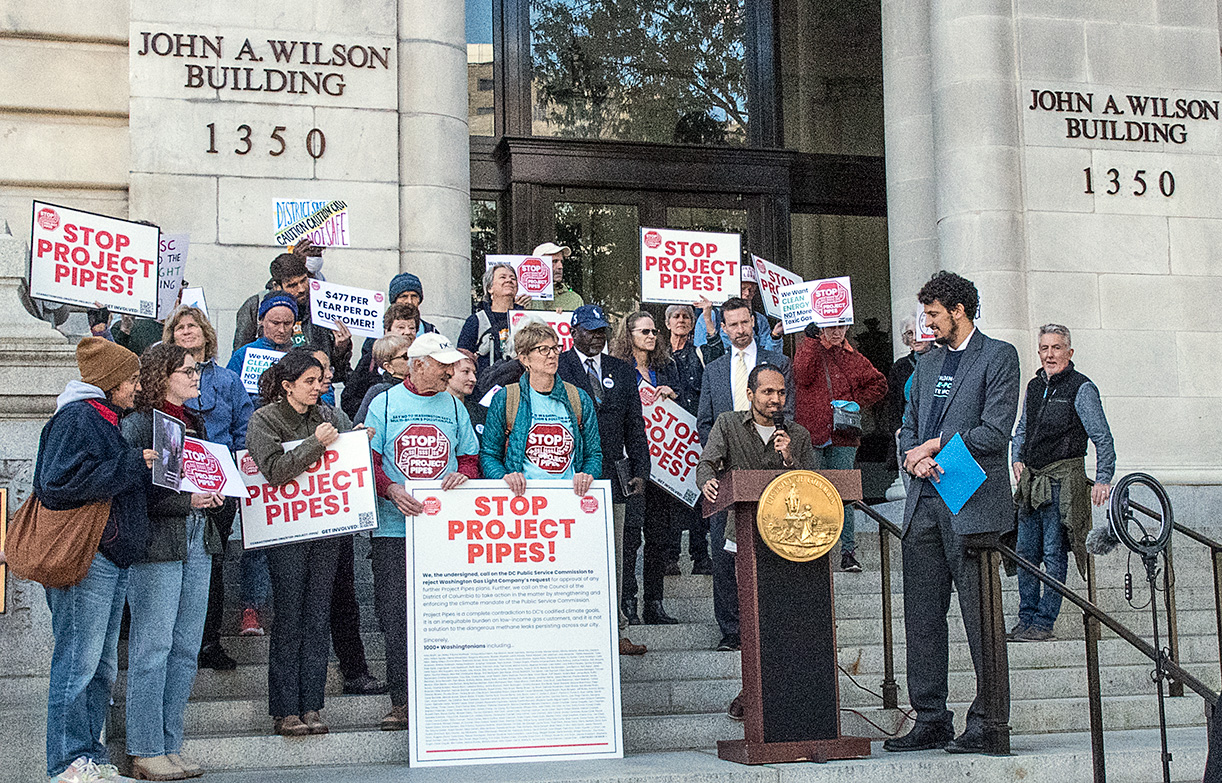
In DC...
Over the last 3 years in DC, we have built a volunteer team focused on educating people on the role the Public Service Commission plays in determining energy infrastructure projects and utility rates.